Program
Your Body Matters
Breaking taboos and saving lives. Women's health in Afghanistan remains trapped in silence and stigma. By raising awareness, we work to prevent avoidable suffering.
The challenge
Women's health in Afghanistan is still heavily shaped by social taboos, and the situation has worsened since the Taliban returned to power. Women's access to education and work has been restricted, and since late 2024 women are no longer allowed to train in health professions. Afghanistan has one of the highest maternal mortality rates in the world. In 2023 alone, an estimated 7,600 women died from causes related to pregnancy and childbirth, although many of these deaths are preventable (WHO, 2024).
Why it matters
Many women know little about their own bodies, including the menstrual cycle, and often delay seeking medical care. These taboos do not disappear after migration. In Switzerland, too, language barriers, shame and unfamiliarity with the health system keep many Afghan women from accessing the care they need.
Our response
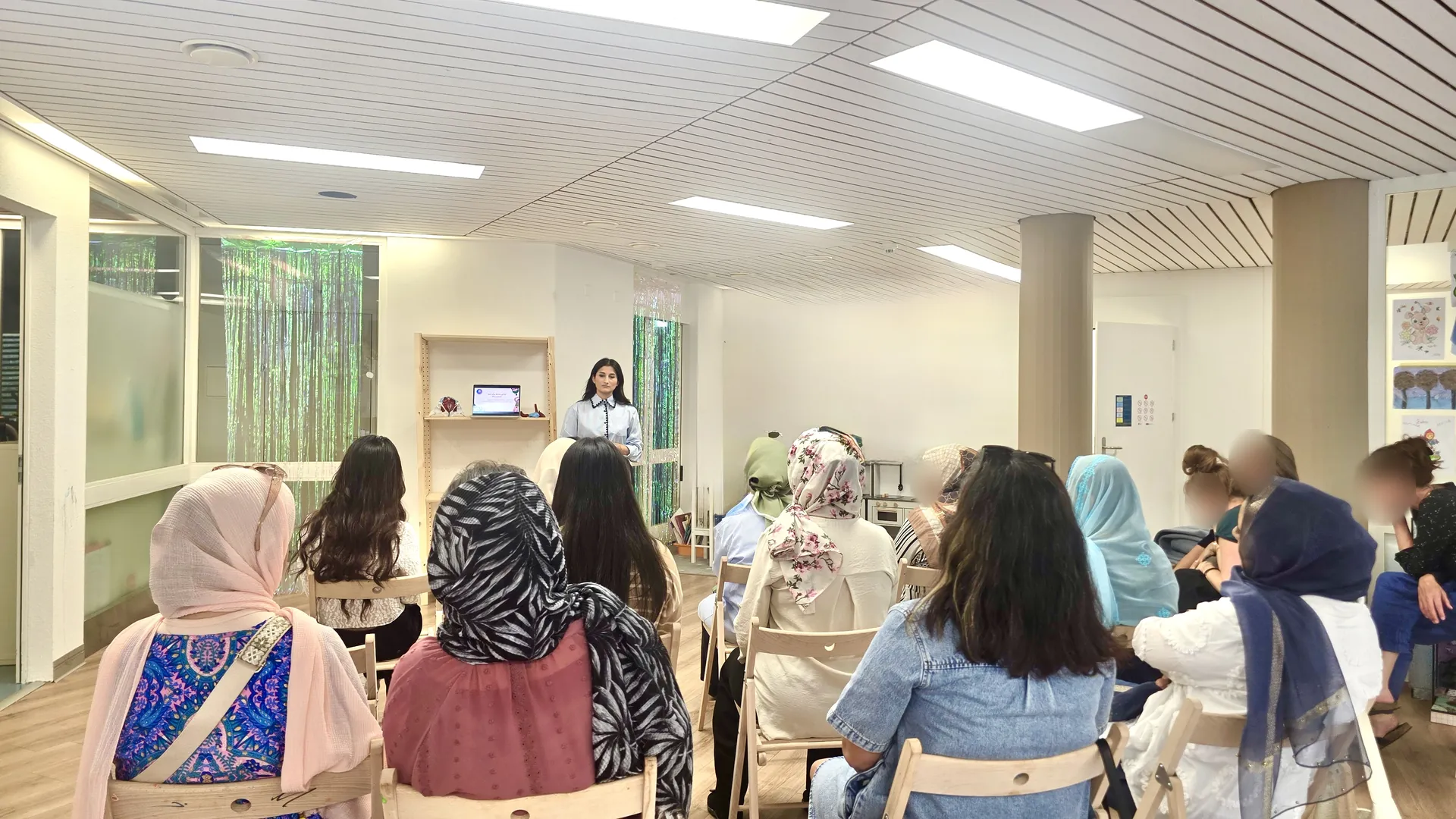
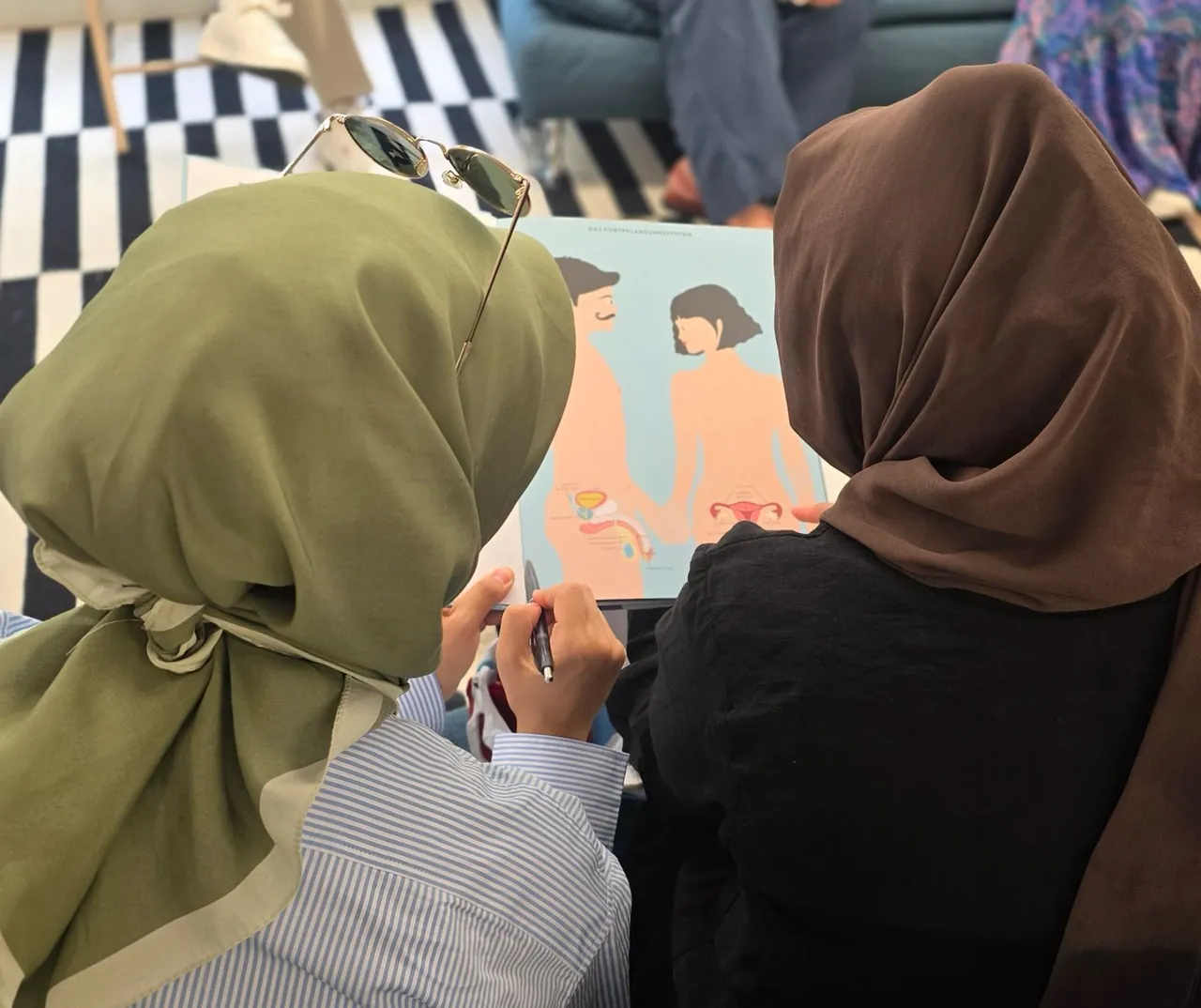
Your Body Matters is a culturally sensitive health education project by Humanity Network for Women (HNW). In safe spaces within trusted communities, we hold workshops in Dari/Farsi, Pashto and German on three topics: menstrual health, pregnancy and maternal health, and contraception and prevention. All medical content is reviewed by health professionals. We also help women find their way to the right services in the Swiss health system.
Founder's story: Wajma Mohammadi
As an unmarried woman, I was told that seeing a gynecologist was not appropriate, and that once I got married, my pain would disappear. For years, I lived with severe pain.
Even after moving to Switzerland, these taboos were so deeply rooted that it never crossed my mind that my pain could be related to women's health. I was taken to emergency departments again and again, until one day an ambulance brought me to a gynecologist and I was diagnosed with endometriosis. I spent some of the most beautiful years of my life in pain.
We know about the world around us, yet because of these taboos, we remain unaware of our own bodies. I do not want other women to suffer pain that could be prevented. As women, we must support one another. Our bodies matter.